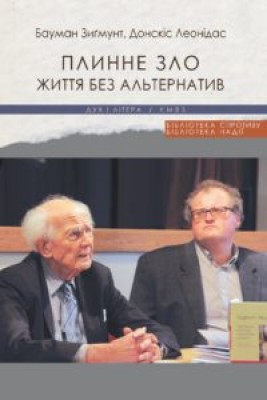
NEWS http://www.donskis.lt/p/en/1 NEWS Wed, 22 May 2013 00:00:00 +0300 en Wed, 22 May 2013 00:00:00 +0300 Is This the End of the World? http://www.donskis.lt/p/en/1/1_/1464 <p style="text-align: justify;">As I contemplate How The Light Gets In 2013 which will be held 1-2 June 2013 in Hay-on-Wye, Great Britain, I cannot help but recall everything I have written about the end of the world. Yes, there is no slip of the pen here, as I am going to talk in the festival about the touch of evil, the devil in politics, and the end of the university. The question arises &mdash; how can we imagine modern life without such things as hope, faith, and education? Is it possible to live here and now without books? Mapping the way in which I think and feel now about those things allows a glimpse of the contemporary world. (Continue...)</p> NEWS http://www.donskis.lt/p/en/1/1_/1464 Mon, 20 May 2013 00:00:00 +0300 Future of Ukraine discussed in the European Parliament http://www.donskis.lt/p/en/1/1_/1462 <p>The 15th of May can be called the Ukraine day. On this day Leonidas Donskis together with the Alliance of Liberals and Democrats for Europe (ALDE) held a conference in which a number of Ukrainian intellectuals, human rights activists, and members from the Ukrainian opposition parties discussed the prospects of European integration for Ukraine. Furthermore, on exactly the same day, the European Commission issued its long-awaited recommendations pointing out that there are no more technical obstacles that could interfere with signing of the EU-Ukraine Association Agreement during the Eastern Partnership summit in Vilnius later this year. However, the final decision is in the hands of the EU Member States and will depend on how Ukraine manages to fulfil the required criteria.&nbsp;</p> <p>The press release issued by the ALDE group yesterday cited Leonidas Donskis, "Today`s decision of the European Commission, despite it being technical in nature, sends a strong political message to the Ukraine authorities that the Association Agreement is not an association with corrupt officials or dysfunctional judiciary, it is an association with and for the Ukrainian people."</p> <p>The Lithuanian MEP added that the decision of the European Commission is good news for Lithuania since the signing of this historical treaty is due to happen during the Lithuanian Presidency. The Eastern Partnership is one of the key areas on the Lithuanian Presidency agenda and closer integration of Ukraine is necessary for the success of the whole partnership programme.</p> <p>The forum attracted almost one hundred guests, including MEPs, diplomats, journalists, experts from various EU institutions and NGOs. The chairman of the oppositional European Party of Ukraine Mykola Katerynchuk and journalist, ex-MP Olha Herasymiuk, stressed that the society of Ukraine, especially the young, progressive generation, is ready and willing to accept the European values and is in fact already European. This party recently became a member of the ALDE party, the body uniting national liberal parties across Europe. According to Katerynchuk and Herasymiuk, it is very important for the EU institutions to understand that the Association Agreement is needed by the people of Ukraine and not the government whose actions are at the center of disputes.</p> <p>The writer, translator, journalist, expert of the cultural policy Olexandr Butsenko presented the particular features of Ukrainian cultural policy and its influence on the process of the European integration. The importance of the cultural policy was also highlighted in the statements of the moderator of the discussion, Leonidas Donskis as well as Andrey Kurkov. The Ukrainian writer, literary critic and political commentator, Andrey Kurkov emphasized that the culture is the first stage of integration and this cultural integration has been successfully pursued for many years. Only after this stage has been completed, the economical, and lastly, the political integration can happen.</p> <p>The second conference panel included the experts of this country from outside of Ukraine. Andrew Rettman, the journalist from EUobserver, predicted into what camps the European Union countries will divide when negotiating the Association Agreement. Lithuania, Poland, Czech Republic and Slovakia were named as possible enthusiasts of signing the treaty while France with other Southern European countries were referred to as more skeptical.</p> <p>Using the help of modern technologies, Edward Lucas, journalist at `The Economist` who has specialized in politics of Central and Eastern Europe for the last couple of decades, delivered a video-message. Lucas provided a particularly insightful explanation of the crossroads situation in which Ukraine is today. He also reiterated the leitmotif of the event, namely the notion that the EU has to understand the difference between the government and the people of the country and seek to help the latter.</p> <p>The last speaker of the conference was Olga Shumylo-Tapiola, a visiting scholar at Carnegie Europe in Brussels, where her research focuses on EU and Russian policy toward Ukraine, Moldova, and Belarus. The speech that gave much food for thought and led to the debates even after the event, drew harsh but accurate picture of Ukrainian society which has yet to overcome many of the post-soviet illnesses and still lacks self-confidence and public spirit.</p> <p>However, in the discussions that followed the official part, the optimistic mood prevailed. Both guests from Ukraine and EU citizens concerned about the future of the country agreed that the Vilnius Summit should be the breaking point in EU-Ukraine relations.</p> NEWS http://www.donskis.lt/p/en/1/1_/1462 Thu, 16 May 2013 00:00:00 +0300 Leonidas Donskis visited Arab minorities in Israel http://www.donskis.lt/p/en/1/1_/1461 <p>On May 11-13, MEP Leonidas Donskis, together with a group of MEPs and MPs from various national parliaments, visited territories inhabited by Arab minorities in Israel. The purpose of the visit was to familiarize with the living conditions of the Palestinians who live in Israel.</p> <p>According to the Council for European Palestinian Relations, CEPR which hosted the visit, although the Arab minority makes up more than 20 percent of Israeli population, their problems are often overshadowed in the broader context of the Israel-Palestine conflict. Even with full rights arising from the Israeli citizenship, Arab minorities face social, economical and political discrimination on a daily basis. The report of the EU mission in 2011 notes that the conditions of income, education, residential areas and use of land are much worse for Arab minorities when compared to those of the majority of non-Arab Israeli inhabitants.</p> <p>Leonidas Donskis, together with the delegation consisting of the MEPs and the MPs from the parliaments of the United Kingdom, Ireland and Belgium and members of the CEPR, started his visit from the Northern territories inhabited by Israeli Palestinians. Delegation visited cities of Umm Al-Fahm and Nazareth in which government forces often demolish Palestinian houses on the grounds of lack of proper permissions. The delegation met representatives of the Arab Committee, Arab members of the Knesset and NGOs&rsquo; representatives.</p> <p>In commemorating the upcoming 65th anniversary of the Nakba Day, the day when the Israeli military forcefully evicted almost a million Palestinians, delegation visited the displaced villages of Al-Bassa and Baaloul. At the end of the visit, Leonidas Donskis and his colleagues visited Bedouins living in the Southern Negev region. According to locals, Israel repeatedly tries to evict their villages without offering any alternatives of living place. However, every time these villages are rebuilt by the local people.</p> <p>After the visit, the delegation from the European Parliament will prepare a report that will be presented to the respective committees of the EP. The MEPs who visited Arab minorities in Israel will also share their impressions in discussions which will be held in the EP in the upcoming weeks.</p> <p>The impressions from the visit of Leonidas Donskis can be found here.</p> NEWS http://www.donskis.lt/p/en/1/1_/1461 Wed, 15 May 2013 00:00:00 +0300 Lithuanian experience can help the developing world http://www.donskis.lt/p/en/1/1_/1437 <p>Last week, the European Parliament Development Committee adopted the report on the Millennium Development Goals (MDGs) and the post-2015 framework prepared by the Polish conservative MEP Filip Kaczmarek. Cooperating with the Lithuanian based NGOs and the Ministry of Foreign Affairs, Leonidas Donskis submitted a number of amendments highlighting the importance of the transition experience of EU member states for the developing countries.</p> <p>The United Nations Millennium Development Goals are eight international goals to be reached by 2015 adopted by 192 UN member states and 123 international organisations. They include the goals to cut the extreme poverty and hunger, reduce child mortality, fight epidemics, provide primary education for all, ensure gender equality, support sustainable development and others.&nbsp; For the first time, these eight international goals were put forward by the UN Millennium Declaration signed by the world leaders in the UN Millennium Summit in 2000.</p> <p>In the light of approaching 2015 and the end of the MDGs it is a high time not only to accelerate international efforts in order to reach these goals, but also to think of the future strategy, to discuss and search for key issues which are most important for the development world and effective organisation of development assistance. This year, the UN will conduct the MDG progress review and will start to prepare for the post-2015 development agenda. Therefore, the EP decided to express its opinion already now adopting a report. The European Commission has also already released a communication on this topic.</p> <p>Leonidas Donskis worked with the MDGs already in 2010 as a shadow rapporteur of the Alliance of Liberals and Democrats for Europe (ALDE) group preparing the MDGs mid-term review. In this occupation Leonidas Donskis achieved that the document not only focuses on traditional development aid recipients, mostly African countries, but also the so called "middle-income" countries and regions suffering under old conflicts and political regimes in Europe itself and in the Central Asia.</p> <p>Last week, the Development Committee adopted 13 out of 14 amendments tabled by Leonidas Donskis which are now part of the final text to be voted upon in the next EP plenary session. For the upcoming post-2015 framework Leonidas Donskis proposed to draw attention to the non-material capital of the EU member states, including their experience and knowledge which could be transferred to the developing countries, especially the valuable transitional experience. At the moment, many countries in the world are in transition phase: transition to democracy, free market economy, becoming development aid donors instead of recipients. Many EU member states, especially from the Baltics and the Eastern and Middle Europe have successfully gone through these transitions.</p> <p>L. Donskis stressed that development assistance can not be only a task of the old EU countries. The other EU members, among them also Lithuania, can successfully contribute to this common goal. Sharing transition experience could be a key to an effective Lithuanian contribution to the EU development assistance effort. This idea is especially relevant in the times of financial crisis when many countries decide to reduce their financial development aid. In this period, it is crucial to search for new methods which would help to continue the progress to achieve the MDGs and the post-2015 goals.</p> <p>The speech by Leonidas Donskis on the UN Millenniums Developments Goals and the post-2015 framework in the Development Committee meeting can be found here.</p> <p>&nbsp;</p> NEWS http://www.donskis.lt/p/en/1/1_/1437 Tue, 30 Apr 2013 00:00:00 +0300 Leonidas Donskis on the decision of the European Court of Human Rights in Y. Tymoshenko case http://www.donskis.lt/p/en/1/1_/1438 <p style="text-align: justify;">- The European Court of Human Rights has acknowledged that Tymoshenko`s imprisonment is politically motivated. Can this be interpreted as the official recognition of the fact that Ukraine has political prisoners?<br /><br />Leonidas Donskis: I wouldn`go so far as to imply that Tymoshenko is a political prisoner. There is no equivalency between Mikhail Khodorkovsky and Yulia Tymoshenko. She is not a prisoner of conscience; nor she is a politically persecuted dissident. I would describe her as a political rival of President Yanukovych and his entourage, who was "neutralized" as a possible threat in terms of being on the winning side in the struggle for public opinion. She is a victim and a hostage of selective justice, but she is not a political prisoner in the sense we apply this term to Russian and Chinese political prisoners.<br /><br />&nbsp;-&nbsp; Can this decision become a sort of prologue to the EU`s sanctions against Ukrainian officials?<br /><br />L.D.: This is bad news for Ukraine. It is a wake-up call for President Yanukovych and also for the political elite of the country. One way or another, Tymoshenko will be free. Let us face it: it is better for autorities to act and free her instead of waiting for the sanctions.<br /><br />&nbsp;- Will the European Court`s decision affect the Association Agreement signing process?<br /><br />L.D.: I am keeping my fingers crossed to avoid this worst-case scenario. The government has to act, to liberate Tymoshenko, and to close this page of an unfortunate story which damaged the political reputation of present Ukrainian authorities. I appeal to common sense and benevolence of all of my colleagues in Ukraine who wish well to their country: no reason to keep this story going. Tymoshenko has to be set free, and the whole story has to be admitted as a mistake. The we will have zero ground, and we will be able to proceed with top priorities of Ukraine and its EU friends - namely, the Association Agreement.</p> NEWS http://www.donskis.lt/p/en/1/1_/1438 Tue, 30 Apr 2013 00:00:00 +0300 Ukraine in the EU: Asset or Liability? http://www.donskis.lt/p/en/1/1_/1445 <p style="text-align: justify;">Ukraine`s joining the EU would dramatically and irreversibly change the political landscape of Europe, end the division of Europe and close the saga of the Iron Curtain and the Cold War. (Continue...)</p> NEWS http://www.donskis.lt/p/en/1/1_/1445 Fri, 26 Apr 2013 00:00:00 +0300 Leonidas Donskis on EU-Ukraine Association Agreement http://www.donskis.lt/p/en/1/1_/1434 <p style="text-align: justify;">MEP Leonidas Donskis asnwered questions of "The Ukrainian Week" website on the topic of EU-Ukraine Association Agreement.</p> <p style="text-align: justify;">1. Which country do you believe support signing of the EU-Ukraine Association Agreement?<br /><br />Leonidas Donskis: I am convinced that Poland and Lithuania are sincerely passionate about Ukraine and its future in the EU, and they, therefore, strongly support signing of the EU-Ukraine Association Agreement. I know that it is a top priority for Lithuania during its presidency in the EU. In addition, I believe that two other Baltic States (Latvia and Estonia), Central European countries (the Czech Republic, Slovakia, Hungary), and two EU members from Southeastern Europe (Bulgaria and Romania) will keep their fingers crossed for Ukraine and will support the Agreement.<br /><br />As far as the largest and the most influential EU countries are concerned, I hope for an important and positive role of the UK, although some of my British colleagues obviously overreact to the Tymoshenko case. With all due respect to the former prime minister of Ukraine, she is far from angel, and selective justice, no matter how much we deplore it, is not the witch-hunt. We have to criticize Ukrainian authorities for their mistakes, but we do not have to confuse the country and its elite, especially people who are not our heroes.&nbsp; &nbsp;<br /><br />2. Which countries will be definitely/might be against the Agreement? For what reason?<br /><br />L.D.: I have a feeling that Germany and France can become a problem. Not because they do not wish you well or have no trust for Ukraine. I am afraid that the expansion of the EU thus far was somewhat problematic in terms of reconciliation of political sensitivities. At the same time, Ukraine requires a special perspective: It is a big nation with immense role in Europe and beyond it. Eventual accession to the club of such an important and big country may change the balance of power and influence, which is a headache of the powerful EU players. As I mentioned, by and large, I expect&nbsp; positive input from the UK.&nbsp;&nbsp;&nbsp;&nbsp; &nbsp;<br /><br />3. What processes/events inside the EU might influence the signing?<br /><br />L.D.: I rely on Lithuania`s presidency, especially the Vilnius Summit in November 2013. Lithuania can make an impact on the Nordic countries trying to consolidate more EU support for the signing of this historic agreement. As for external factors, I would stress the deteriorating situation of human rights and democracy in Russia, which comes as a clear sign that Ukraine becomes pivotal trying to contain Russia`s backlash to the Magnitski list and other EU and US initiatives strengthening NGOs and civil society in Russia. <br />&nbsp;<br />4. Do you think Ukraine&rsquo;s government and politics have done enough to persuade EU in their readiness for Euro-integration?<br /><br />L.D.: There were many good reactions, yet I would more count on pro-active, rather than reactive, stance of Ukraine. Under these circumstances, the country`s elite deserves credit. Yet it always possible to do it better, especially when so much is at stake determining the future of such a great country as Ukraine.</p> NEWS http://www.donskis.lt/p/en/1/1_/1434 Thu, 25 Apr 2013 00:00:00 +0300 EP plenary highlights: emissions trading, Kazakhstan, Hungary http://www.donskis.lt/p/en/1/1_/1432 <p>Last week, the members of the European Parliament met in the blooming Strasbourg. During this EP plenary session they discussed the constitutional reform in Hungary, EU financial support to the crisis-struck Cyprus, agreed on the discharge of the 2011 budget of all EU institutions, with the exception of the Council, easing of the visa requirements to the citizens of Ukraine and Moldova and lastly refused to restrict the emissions trading policy. The MEPs also heard speeches of the Prime Minister of Finland Jyrky Katainen and the President of Ireland, the state currently holding the Presidency of the Council, Michael D. Higgins.</p> <p>Arrows of criticism to Hungary</p> <p>On Wednesday, the MEPs and the Vice-President of the European Commission and Commissioner for Justice Viviane Reding together with the Irish Minister for European Affairs Lucinda Creighton intensely debated the issue of the new amendments of the Constitution of Hungary and their compliance with the EU law. In March, the Hungarian Parliament approved the fourth batch of the amendments since 2010, year when Viktor Orb&aacute;n led Fidesz-Hungarian Civic Union party won general elections. In accordance with these amendments, the President will no longer have the veto power, and will be compelled to sign any constitutional amendments except in the cases of the procedural conflicts; the parties will be limited to the state media when making political broadcasts; state-funded students will be obliged to work in Hungary for certain period after the graduation; and family is strictly defined as "marriage based relationship between man and woman&rdquo;. The government claims that this legislation, also called the fourth amendment, is mostly of technical nature, but the opponents maintain that it will help to accelerate the attack against the democratic institutions.</p> <p>In debates, many MEPs expressed reservations about the possible breaches of the EU law by the amendments of the Constitution of Hungary. The EP committee of the Civil Liberties, Justice and Home Affairs is currently considering if the amendments respect the fundamental values of the EU. Legal evaluation is also ongoing in the European Commission, which performs the function of supervision of national legislation compliance with the EU Treaties.</p> <p>Guy Verhofstadt, the leader of Leonidas Donskis` political group the Alliance of Liberals and Democrats for Europe (ALDE), criticized slow response of the European Commission and prompted to initiate the proceedings that are provided in the Treaty in case of a serious breach of EU values. These include complete suspension of voting right in the EU institutions.</p> <p>Emissions trading policy will not be tightened</p> <p>On Tuesday, by the minor margin of majority of the votes, the European Parliament declined the initiative to freeze the emissions trading. The ETS, a carbon market system created in 2005, sets an overall emissions ceiling which is gradually being reduced over the long term. By 2020, emissions from industry sectors covered by the ETS will be 21% lower than in 2005. Beneath this ceiling, companies receive or buy credits auctioned by member states. One credit corresponds to one tonne of CO2 emissions. Companies may also sell on unused credits. Limiting the supply of credits ensures that they have value.</p> <p>MEPs opposing the measure advocate a deeper reform of the ETS and fear that interfering with the supply of credits could undermine players` confidence in the scheme. Some also believe that a rise in the carbon price would erode the competitiveness of the European industry and it will be passed on to household energy bills. On the other hand, supporters of the measure argued that the oversupply of credits must be corrected to make the system function as intended. They maintan that a higher carbon price would catalyse the EU`s transition to a green economy by stimulating investment and innovation and could also help to connect the EU carbon market with those of other regions. Leonidas Donskis supported the decision which is more beneficial to Lithuania and voted to reduce the supply of the emission credits. The rest of the ALDE group was not unanimous on this question.</p> <p>"I deeply regret today`s vote. It is the beginning of the repatriation of climate policy," said German MEP and rapporteur of this legislation Matthias Groote. "This kind of politics plays into the hands of climate sceptics,&rdquo; he added.</p> <p>EP resolution on human rights in Kazakhstan</p> <p>Initiated by the MEPs active in the area of the issues related to the post-soviet states, including Leonidas Donskis, an urgent resolution on the situation of the human rights in Kazakhstan was passed by the European Parliament. Leonidas Donskis was the shadow of this resolution on behalf of his political group the Alliance of Liberals and Democrats for Europe (ALDE).</p> <p>In this resolution, the Parliament strongly criticised the court decision to ban opposition parties, including the unregistered &acute;Alga!` party. The leader of this party and strong opponent of the President Nursultan Nazarbayev, Vladimir Kozlov was sentenced for seven years of imprisonment after his last visit to Strasbourg where he met the members of the Parliament, including Leonidas Donskis. The charges against him were based on the claim of promoting social discord. In his speech in the EP, Leonidas Donskis said that there is information about deteriorating health condition of V. Kozlov and urged the EP to act without delay.</p> <p>The House reiterated its concern at the detention of opposition leaders, journalists and lawyers on the basis of trials which fall short of international standards and called again for the release of persons convicted on the basis of vague criminal charges, which could be considered to be politically motivated. The MEPs urge the government of Kazakhstan to ensure international standards in imprisonment facilities and provide appropriate medical support to all prisoners, including Vladimir Kozlov. The Resolution also discusses the situation of human rights, democracy and rule of law in Kazakhstan. The country is urged to create the conditions that would allow for opposition activists, journalists and lawyers to act freely.</p> NEWS http://www.donskis.lt/p/en/1/1_/1432 Mon, 22 Apr 2013 00:00:00 +0300 Leonidas Donskis on Human rights situation in Kazakhstan http://www.donskis.lt/p/en/1/1_/1431 <p style="text-align: justify;">On April 18 at the EP plenary session in Strasbourg Leonidas Donskis presents the position of the Alliance of Liberals and Democrats for Europe (ALDE) on the topic of human rights situation in Kazakhstan.</p> NEWS http://www.donskis.lt/p/en/1/1_/1431 Thu, 18 Apr 2013 00:00:00 +0300 European Parliament resolution on the human rights situation in Kazakhstan (2013/2600(RSP)) http://www.donskis.lt/p/en/1/1_/1448 <p>The European Parliament,</p> <p>- &nbsp; having regard to its previous resolutions on Kazakhstan, including those of 15 March 2012 on Kazakhstan(1), 15 December 2011 on the state of implementation of the EU Strategy for Central Asia(2), and 17 September 2009 on the case of Yevgeni Zhotis in Kazakhstan(3),<br /></p> <p><br /></p> <p>- &nbsp; having regard to its resolution of 22 November 2012 containing the European Parliament&rsquo;s recommendations to the Council, the Commission and the European External Action Service on the negotiations for an EU-Kazakhstan enhanced partnership and cooperation agreement(4),</p> <p><br /></p> <p>- &nbsp; having regard to the statement of 9 October 2012 by the spokesperson of High Representative Catherine Ashton on the trial of Vladimir Kozlov in Kazakhstan and to the High Representative&rsquo;s statement of 17 January 2012 on parliamentary elections in Kazakhstan,</p> <p><br /></p> <p>- &nbsp; having regard to the legal opinion of the International Commission of Jurists of 13 February 2013 on the disciplinary proceedings against lawyers in Kazakhstan,</p> <p><br /></p> <p>- &nbsp; having regard to the statement of 25 January 2012 by the OSCE Representative on Freedom of the Media on the media situation in Kazakhstan,</p> <p><br /></p> <p>- &nbsp; having regard to the statement of 1 February 2012 by the Director of the OSCE&rsquo;s Office for Democratic Institutions and Human Rights on the clampdown on the Kazakh opposition,</p> <p><br /></p> <p>- &nbsp; having regard to the statement of 20 March 2013 by the International Partnership for Human Rights (IPHR) entitled &lsquo;Overview of Human Rights concerns in Kazakhstan&rsquo;,</p> <p><br /></p> <p>- &nbsp; having regard to Rules 122(5) and 110(4) of its Rules of Procedure,</p> <p><br /></p> <p>A. whereas on 21 December 2012, following a lawsuit introduced on 20 November 2012 by Kazakhstan&rsquo;s Prosecutor-General, the Almaty District Court banned the unregistered opposition party &lsquo;Alga!&rsquo; on charges of extremism; whereas the ban makes Aliya Turusbekova, the wife of Vladimir Kozlov, personally liable;</p> <p><br /></p> <p>B. &nbsp;whereas on 25 December 2012 a number of opposition media outlets, including eight Kazakh newspapers and 23 web news portals, were banned on charges of extremism, being described by the prosecutor as &lsquo;one unified media outlet Respublika&rsquo;; whereas this decision was confirmed by the Court of Appeal on 22 February 2013, with the effect that the journalists affected were banned from exercising their profession;</p> <p><br /></p> <p>C. &nbsp;whereas Kazakhstan is an important international actor and is of the utmost importance for the political and socio-economic development, as well as the security situation, of the whole region; whereas it has played a positive role in Central Asia, making efforts to develop good neighbourly relations with bordering countries, resume regional cooperation and resolve all bilateral issues by peaceful means; whereas the EU has a vital interest in stepping up political, economic and security cooperation with that region via a strong and open EU‑Kazakhstan relationship;</p> <p><br /></p> <p>D. whereas Kazakhstan has long limited key civil and political rights, such as freedom of assembly, expression and religion; whereas over the last two years there has been a decline in respect for fundamental freedoms while, in the wake of the Zhanaozen violence in December 2011, 2012 saw an overt crackdown on government critics;</p> <p><br /></p> <p>E. &nbsp;whereas during recent months several opposition leaders, human rights defenders, journalists and civil-society actors have been subjected to harassment and criminal prosecution, leading in several cases to prison sentences;</p> <p><br /></p> <p>F. &nbsp;whereas on 13 March 2013 the Court of Cassation refused to grant appeal in the case of Vladimir Kozlov, who was sentenced to seven and a half years in prison and confiscation of property on charges of &lsquo;inciting social discord&rsquo;, &lsquo;calling for the forcible overthrow of the constitutional order&rsquo; and &lsquo;creating and leading an organised group with the aim of committing crimes&rsquo;; whereas Kozlov is currently filing an appeal to the Supreme Court as the last instance for appeal in his case;</p> <p><br /></p> <p>G. whereas on 7 December 2012 the human rights defender Vadim Kuramshin was sentenced to 12 years in prison for blackmailing the district attorney&rsquo;s assistant; whereas this sentence was confirmed by the Appeal Court on 14 February 2013; whereas Mr Kurashim&rsquo;s re-arrest took place on his return from the OSCE conference in September in Warsaw and came after his release following a previous trial in August 2012;</p> <p><br /></p> <p>H. whereas the Kazakh Government is considering starting work on a new National Human Rights Action plan for 2013-2020;</p> <p><br /></p> <p>I. &nbsp; whereas the Kazakh authorities have established a working group under the Prosecutor- General to reform the Criminal Code; whereas on 15 and 16 March 2013 a round table on the &lsquo;Reform of the Criminal Code of Kazakhstan based on the principles of rule of law&rsquo; was held, with the participation of a delegation of the Venice Commission to advise on the reform; whereas the European Parliament has urged the Kazakh authorities to bring the country&rsquo;s criminal law into line with international standards, including the reform of Article 164 on &lsquo;inciting social discord&rsquo;;</p> <p><br /></p> <p>J. &nbsp; whereas the Kazakh authorities have repeatedly used the charge of &lsquo;inciting social discord,&rsquo; a vague and over-broad charge that can be used to criminalise legitimate exercise of the rights of freedom of expression and association as protected under international human rights law;</p> <p><br /></p> <p>K. whereas Kazakhstan&rsquo;s three-year term as a member of the UNHRC (United Nations Human Rights&rsquo; Council) began on 1 January 2013;</p> <p><br /></p> <p>L. &nbsp;whereas Kazakhstan, as a member of the OSCE, of which it held the chairmanship in 2010, has committed itself to respecting and implementing the fundamental principles of that organisation;</p> <p><br /></p> <p>M. whereas defamation remains criminalised, while the law of 10 July 2009 on the Introduction of Changes and Additions to the Legislation on Informational-Communicative Networks equates internet resources (websites, chatrooms, blogs, discussion forums) with mass media outlets and therefore makes those resources and their owners liable for the same range of offences;</p> <p><br /></p> <p>N. whereas at the end of November 2012, HR/VP Ashton travelled to Central Asia and visited Kazakhstan while the legal bans on the opposition and the media outlets were being imposed; whereas she did not issue any statement on the matter;</p> <p><br /></p> <p>O. whereas in July 2012 the UN High Commissioner for Human Rights, Navi Pillay, following her two-day visit to Kazakhstan, called on the authorities to authorise an independent international investigation into the events of Zhanaozen, their causes and their aftermath;</p> <p><br /></p> <p>1. &nbsp;Stresses the importance of relations between the EU and Kazakhstan and of strengthening economic and political cooperation in all areas; highlights the great interest the EU has in a sustainable relationship with Kazakhstan in terms of political and economic cooperation;</p> <p><br /></p> <p>2. &nbsp;Strongly criticises the court decision to ban opposition parties on charges of extremism, including the unregistered party &lsquo;Alga!&rsquo;, as well as to ban key independent media actors, given that this violates the principles of freedom of expression and assembly and raises major concerns with regard to future repression of independent media and the opposition;</p> <p><br /></p> <p>3. &nbsp;Calls on the authorities to respect the principles and commitments of the OSCE standards on freedom of expression, assembly and association; encourages Kazakhstan to view criticisms not as a threat but as a constructive tool with which to improve policies and inclusiveness;</p> <p><br /></p> <p>4. &nbsp;Stresses that Aliya Turusbekova cannot be held responsible for actions of third persons;</p> <p><br /></p> <p>5. &nbsp;Calls on the EU and the Member States to seek guarantees that protect journalists, opposition activists and human rights defenders and their families, and in particular those visiting the EU institutions to discuss human rights issues, against any kind of subsequent personal threats, pressures or prosecution;</p> <p><br /></p> <p>6. &nbsp;Reiterates its concern over the detentions of opposition leaders, journalists and lawyers on the basis of trials which fall short of international standards, and reaffirms its call for the release of all persons convicted on the basis of vague criminal charges which could be considered to be politically motivated, including among others Vladimir Kozlov, Vadim Kurashim and Roza Tuletaeva; expresses its concern with regard to the fairness of trials, and reiterates its call for the guaranteeing of transparency and international standards in trials, an end to convictions on the basis of the above vague criminal charges, and the upholding of the independence of the judiciary;</p> <p><br /></p> <p>7. &nbsp;Calls on the Kazakh authorities to guarantee detention conditions that conform to international standards and to allow adequate medical treatment for all prisoners, including the opposition leader Vladimir Kozlov; calls for the full implementation of improvements included in the recent reform of the prison system and for further improvement to meet international standards;</p> <p><br /></p> <p>8. &nbsp;Strongly emphasises that the legitimate fight against terrorism and extremism should not be used as an excuse to ban opposition activity, hinder freedom of expression or hamper the independency of the judiciary;</p> <p><br /></p> <p>9. &nbsp;Stresses that Kazakhstan is an increasingly important international partner in the region, be it with regard to cooperation with NATO, support for the E3+3 talks with Iran, or the establishment of an international fuel bank in Kazakhstan; welcomes Kazakhstan&rsquo;s ambition to engage actively as a mediator/facilitator in international security issues concerning the wider region; urges the Kazakh authorities to honour the international commitments they have signed up to, including those relating to the rule of law and the independence of the judiciary;</p> <p><br /></p> <p>10. Calls on Kazakhstan to create a climate where opposition activists, journalists and lawyers can freely exercise their activities, including via necessary legal reforms; stresses the EU&rsquo;s commitment to supporting Kazakhstan in this effort;</p> <p><br /></p> <p>11. Calls on Kazakhstan to review its legislation on religion and to ease restrictions on the registration and practice of religion;</p> <p><br /></p> <p>12. Stresses the importance of respecting and promoting the right of workers to form independent labour unions, conduct strikes, and collectively bargain with employers, in accordance with Kazakhstan&rsquo;s obligations under international human rights law;</p> <p><br /></p> <p>13. Welcomes the dialogue with the delegation of the Venice Commission on the new Code of Criminal Procedure, and encourages further collaboration with the Venice Commission with a view to deriving maximum benefit from its experience; stresses that the reform should aim at strengthening the independence of the judiciary and the rule of law and fulfilling international standards; reaffirms its call for the reform of Article 164 on &lsquo;inciting social discord&rsquo;, and calls on the EEAS to undertake close monitoring of the reform and the content of the new law;</p> <p><br /></p> <p>14. Reaffirms its call on the Kazakh authorities to follow through with enforcement of the existing Human Rights Action Plan, drawing on the recommendations of the Venice Commission and making use of EU technical assistance under the Rule of Law initiative; encourages and supports Kazakhstan in its efforts to develop a new Human Rights Action Plan for 2013-2020; invites the Kazakh authorities to collaborate with NGOs;</p> <p><br /></p> <p>15. Welcomes the regular EU-Kazakhstan human rights dialogues; underlines the importance of human rights dialogues between the EU and the Kazakh authorities, and welcomes the constructive approach being shown on the Kazakh side; calls for a strengthening of the dialogues conducive to the establishment of a forum where issues can be openly addressed; stresses that these dialogues should be effective and results-oriented, and should involve civil‑society actors where possible;</p> <p><br /></p> <p>16. Welcomes the international student exchange programmes introduced by the Kazakh Government; underlines the fundamental impact these stays abroad have in terms of the democratic education of Kazakh students; welcomes the support offered by the Kazakh authorities to these students on their return;</p> <p><br /></p> <p>17. Calls on the EU, and in particular the EEAS, to closely monitor developments in Kazakhstan, raise concerns with the Kazakh authorities where necessary, offer assistance, and report regularly to Parliament; also calls on the EU delegation in Astana to play a more proactive role in monitoring the situation, including the observation of trials and prison visits;</p> <p><br /></p> <p>18. Instructs its President to forward this resolution to the Council, the European External Action Service, the EU Special Representative for Human Rights, the governments and parliaments of the Member States, the Organisation for Security and Cooperation in Europe, the UN Human Rights Council, and the Government and Parliament of Kazakhstan.</p> <p><br /></p> <p><br /></p> <p>(1) </p> <p>P7_TA(2012)0089.</p> <p>(2) </p> <p>P7_TA(2011)0588.</p> <p>(3) </p> <p>OJ C 224 E, 19.8.2010, p. 30.</p> <p>(4) </p> <p>P7_TA(2012)0459.</p> FULL TEXT in .pdf <p>&nbsp;</p> <p><br /></p> <p>&nbsp;</p> NEWS http://www.donskis.lt/p/en/1/1_/1448 Wed, 17 Apr 2013 00:00:00 +0300 European Parliament resolution on Vietnam, in particular freedom of expression (2013/2599(RSP)) http://www.donskis.lt/p/en/1/1_/1447 <p>The European Parliament,</p> <p>- &nbsp; having regard to the Partnership and Cooperation Agreement between the EU and Vietnam signed on 27 June 2012 and to the EU-Vietnam human rights dialogue held twice a year between the EU and the government of Vietnam,<br /></p> <p><br /></p> <p>- &nbsp; having regard to the International Covenant on Civil and Political Rights to which Vietnam acceded in 1982,</p> <p><br /></p> <p>- &nbsp; having regard to the Universal Periodic Review Outcome on Vietnam by the UN Human Rights Council of 24 September 2009,</p> <p><br /></p> <p>- &nbsp; having regard to report of the UN Special Rapporteur on the promotion and protection of the right to freedom of opinion and expression to the 14th Session of the Human Rights Council in April 2010,</p> <p><br /></p> <p>- &nbsp; having regard to the Statement by the Spokesperson of EU High Representative Catherine Ashton on the sentencing of bloggers in Vietnam of 24 September 2012,</p> <p><br /></p> <p>- &nbsp; having regard to its resolution of 11 December 2012 on &lsquo;a Digital Freedom Strategy in EU Foreign Policy&rsquo;(1),</p> <p><br /></p> <p>- &nbsp; having regard to its previous resolutions on Vietnam,</p> <p><br /></p> <p>- &nbsp; having regard to Rules 122(5) and 110(4) of its Rules of Procedure,</p> <p><br /></p> <p>A. whereas three prominent journalists - Nguyen Van Hai/Dieu Cay, Ta Phong Tan and Pan Thanh Hai - were sentenced to prison on 24 September 2012; whereas, following an appeal, their sentences were confirmed as 12, 10 and 3 years respectively, followed by several years of house arrest, for posting articles on the website of the Vietnamese Club of Free Journalists;</p> <p><br /></p> <p>B. &nbsp;whereas, according to recent reports by international human rights organisations, 32 cyber dissidents have been handed heavy prison sentences or are awaiting trial in Vietnam; 14 pro-democracy activists have been sentenced to a total of over 100 years in prison for exercising their right to freedom of expression; a group of 22 peaceful environmental activists have been given prison terms ranging from 10 years to life imprisonment; a journalist working for the state-run press was fired after writing a post on his personal blog criticising the Secretary-General of the Communist Party; and cyber dissidents, including Le Cong Cau and Huynh Ngoc Tuan, are frequently harassed and assaulted by the police;</p> <p><br /></p> <p>C. whereas several prisoners of conscience have been sentenced under vaguely worded &lsquo;national security&rsquo; provisions that make no distinction between acts of violence and the peaceful expression of dissenting opinions or beliefs, such as &lsquo;propaganda against the Socialist Republic of Vietnam&rsquo; (Article 88 of the Criminal Code), &lsquo;activities aimed at overthrowing the people&rsquo;s power&rsquo; (Article 79), &lsquo;sowing divisions between religious and non-religious people&rsquo; (Article 87) and &lsquo;abusing democratic freedoms to encroach on the interests of the state&rsquo; (Article 258); whereas Ordinance 44 of 2002 authorising detention without trial is increasingly used to detain dissidents;</p> <p><br /></p> <p>D. whereas bloggers and human rights defenders increasingly turn to the internet to voice their political opinions, expose corruption, and draw attention to land-grabbing and other official abuses of power;</p> <p><br /></p> <p>E. &nbsp;whereas the Vietnamese authorities systematically suppress freedom of expression and peaceful assembly and persecute those who question government policies, expose cases of official corruption or call for alternatives to the one-party rule;</p> <p><br /></p> <p>F. &nbsp;whereas Vietnam is drafting the &lsquo;Decree on the Management, Provision, Use of Internet Services and Information Content Online&rsquo;, a new decree on internet management that would legalise content-filtering, censorship and sanctions by the government against vaguely defined &lsquo;prohibited acts&rsquo; and which would oblige internet companies and providers, including foreign ones, to cooperate with the government in the surveillance and tracking of cyber dissidents; whereas digital freedoms are increasingly under threat;</p> <p><br /></p> <p>G. whereas in 2009, during the UN Human Rights Council&rsquo;s Universal Periodic Review (UPR) of Vietnam&rsquo;s human rights record, Vietnam accepted a number of recommendations on freedom of expression, including the recommendation to &lsquo;fully guarantee the right to receive, seek and impart information and ideas in compliance with article 19 of the International Covenant on Civil and Political Rights&rsquo;; whereas Vietnam has still not implemented those recommendations;</p> <p><br /></p> <p>H. whereas land confiscation by government officials, use of excessive force in response to public protests over evictions, arbitrary arrests of activists and heavy sentences for protesters are ongoing, while the issues of land rights and land use are unclear;</p> <p><br /></p> <p>I. &nbsp; whereas freedom of religion and belief is repressed and the Catholic Church and non-recognised religions, such as the Unified Buddhist Church of Vietnam, the Protestant churches and others continue to suffer from severe religious persecution;</p> <p><br /></p> <p>J. &nbsp; whereas Vietnam has started extensive public consultations with a view to drafting a new Constitution, but those who expressed their opinions have faced sanctions and pressure;</p> <p><br /></p> <p>K. whereas Vietnam is bidding for a seat on the United Nations Human Rights Council for the 2014-2016 term;</p> <p><br /></p> <p>1. &nbsp;Expresses its deep concern about the conviction and harsh sentencing of journalists and bloggers in Vietnam; condemns the continuing violations of human rights, including political intimidation, harassment, assaults, arbitrary arrests, heavy prison sentences and unfair trials, in Vietnam perpetrated against political activists, journalists, bloggers, dissidents and human rights defenders, both on- and offline, in clear violation of Vietnam&rsquo;s international human rights obligations;</p> <p><br /></p> <p>2. &nbsp;Urges the authorities to immediately and unconditionally release all bloggers, online journalists and human rights defenders; calls upon the government to cease all forms of repression against those who exercise their rights to freedom of expression, freedom of belief and freedom of assembly in accordance with international human rights standards;</p> <p><br /></p> <p>3. &nbsp;Calls on the Vietnamese government to amend or repeal legislation that restricts the right to freedom of expression and freedom of the press in order to provide a forum for dialogue and democratic debate; calls also on the government to modify the draft &lsquo;Decree on the Management, Provision, Use of Internet Services and Information Content Online&rsquo; to ensure that it protects the right to freedom of expression online;</p> <p><br /></p> <p>4. &nbsp;Urges the Vietnamese government to cease forced evictions, to secure freedom of expression for those who denounce abuses on land issues, and to guarantee those who have been forcibly evicted access to legal remedies and adequate compensation in conformity with international standards and obligations under international human rights law;</p> <p><br /></p> <p>5. &nbsp;Calls on the authorities to comply with Vietnam&rsquo;s international obligations by putting an end to religious persecution and removing legal hindrances to independent religious organisations freely conducting peaceful religious activities, which entails the recognition of all religious communities, the free practice of religion and the restitution of assets arbitrarily seized by the state from the Unified Buddhist Church of Vietnam, the Catholic Church and any other religious community;</p> <p><br /></p> <p>6. &nbsp;Expresses deep concern about the detention conditions of prisoners of conscience stemming from ill-treatment and lack of medical care; requests that the authorities guarantee their physical and psychological integrity, ensure unrestricted access to legal counsel and offer appropriate medical assistance to those in need;</p> <p><br /></p> <p>7. &nbsp;Reiterates that the human rights dialogue between the EU and Vietnam should lead to concrete progress on human rights and democratisation; calls, in this respect, on the European Union to consistently raise concerns about human rights violations in Vietnam at the highest levels and to intensify pressure on the Vietnamese authorities to lift internet and blogging controls and prohibitions on privately owned media, allow groups and individuals to promote human rights and express their opinions and dissent publicly, take steps to abolish the death penalty, repeal or amend national security laws used to criminalise peaceful dissent, and release peaceful prisoners of conscience;</p> <p><br /></p> <p>8. &nbsp;Reminds all parties that Article 1 of the Partnership and Cooperation Agreement (PCA) states that: &lsquo;Respect for human rights and democratic principles is the basis for the cooperation between the Parties and for the provisions of this Agreement and it constitutes an essential element of the Agreement&rsquo;; asks the High Representative to assess the compatibility of the Vietnamese government&rsquo;s policies with the conditions included in the PCA;</p> <p><br /></p> <p>9. &nbsp;Encourages Vietnam to move towards ratification of the Rome Statute of the International Criminal Court (ICC) and Convention against Torture (CAT); calls on the government to put in place an independent national human rights commission;</p> <p><br /></p> <p>10. Requests that the ASEAN Intergovernmental Commission on Human Rights examine the situation concerning the state of human rights in Vietnam with a special focus on the freedom of expression, and that it make recommendations to the country;</p> <p><br /></p> <p>11. Welcomes the fact that the Government of Vietnam has issued a call for public input into its first constitutional reform since 1992 and that the deadline has now been extended until September 2013, but regrets that the public consultation has led to sanctions and pressure against those who legitimately express their opinions; hopes that the new Constitution addresses the issues of civil and political rights and religious freedoms as a priority; welcomes in this respect the opening of a dialogue with human rights organisations; expresses its hope that this can lead to important reforms on labour, education and human rights over a longer term; recommends that an invitation be addressed to the UN Special Rapporteur on Freedom of Expression and Opinion to visit the country and that the authorities fully implement any recommendations;</p> <p><br /></p> <p>12. Instructs its President to forward this resolution to the Vice-President of the Commission/High Representative of the Union for Foreign Affairs and Security Policy, the Council, the Commission, the governments of the Member States, the government and parliament of Vietnam, the governments of ASEAN Member States, the United Nations High Commissioner for Human Rights and the Secretary-General of the United Nations.</p> <p><br /></p> <p>&nbsp;</p> <p><br /></p> <p><br /></p> <p>(1) </p> <p>Texts adopted: P7_TA(2012)0470</p> <br /> <p>&nbsp;</p> FULL TEXT in .pdf <p><br /></p> <p>&nbsp;</p> NEWS http://www.donskis.lt/p/en/1/1_/1447 Wed, 17 Apr 2013 00:00:00 +0300 Can we dry Tibetan tears? http://www.donskis.lt/p/en/1/1_/1429 <p>On Wednesday, the Alliance of Liberals and Democrats for Europe (ALDE) held the annual conference on Tibet in the European Parliament in Brussels. These conferences have already become a tradition of the current EP term. The main topics of this year`s event "Tears of Tibet", organised by the Estonian ALDE member Kristiina Ojuland and Lithuanian MEP Leonidas Donskis, included the growing number of self-immolations, the consequences of the Chinese policies on human rights and environment in Tibet, and EU and EP role in addressing these problems more effectively.</p> <p>The former Estonian Minister of Foreign Affairs MEP K. Ojuland opened the conference stating that in recent years, the situation in Tibet has tremendously worsened, Chinese policies on Tibet have become more and more strict and the negotiations on the cultural autonomy of Tibet are stuck.</p> <p>Especially disturbing is the highly rising number of self-immolations of Tibetans protesting against the current situation in Tibet. According to the experts of Tibet and NGO representatives present in the conference, this number has already reached 114. More and more young people decide to sacrifice their lives and send a message to their compatriots and to the world urging to continue the non-violent fight for Tibetan autonomy. Compared to earlier, when mostly monks were involved in these actions, nowadays self-immolations are more and more common among ordinary Tibetans. An act of self-immolation is of particular importance in Buddhist traditions and people who sacrifice their lives this way are very respected and buried following special traditions. However, China has criminalized self-immolation comparing it to an act of terrorism and does not allow for the burial ceremony to take place. It is very disappointing that reactions to the tragedy of Tibet from the international community are very slow and silent and the absence of protests in China itself can be understood as the support for the Chinese policies in Tibet.</p> <p>The conference which was attended by the representative of Dalai Lama in the EU, Ngodup Dorjee, also featured other dimensions of the Chinese policies in Tibet which are less known in the Western world. They include various developments harming traditional Tibetan culture and lifestyle, for example, massive resettlement of Chinese to Tibet to work in new industrial objects which contributed to the fact that already now there are more Chinese in Tibet that Tibetans and in the capital Lhasa there are even three times more Chinese than local population. China plans and implements huge industrial projects on the Tibetan plateau including further dams reverting rivers, compulsory agricultural projects and forced resettlements which will completely destroy the traditional Tibetan nomad lifestyle.</p> <p>Is it possible to invite Chinese leaders and Dalai Lama and representatives of the exile Tibetan government to the European Parliament? How can the EU reconcile economic partnership with China and tough stand on the situation of Tiber? Would it be possible to send an official EP delegation to Tibet? What are the perspectives of creating the post of the EU Special Representative to Tibet? These and other questions were considered in the discussion after the presentations trying to find concrete actions for the European Union and the European Parliament in order to more effectively act on the question on Tibet.</p> <p>Closing the event, MEP Leonidas Donskis highlighted that it a mistake to hope that such economically modern state which is China nowadays will naturally adopt the principles and standards of the modern liberal democracy and human rights. "No matter how strong are our economic interests, in this area we should never accept compromises. That would mean our moral defeat", - said the Member of the EP. Concluding L. Donskis wished the Western world, the EU and himself courage and political will. Without these two crucial elements real changes in Tibet are not possible.</p> NEWS http://www.donskis.lt/p/en/1/1_/1429 Fri, 12 Apr 2013 00:00:00 +0300 Five Hundred Years after Machiavelli’s Prince: An Intellectual in Politics http://www.donskis.lt/p/en/1/1_/1433 <p style="text-align: justify;">Accepted and vilified, celebrated and rebuked by all, as Fran&ccedil;ois Villon would have had it, Machiavelli became a litmus test case for nearly every epoch in European history. Much remains to be done to reject numerous clich&eacute;s and senseless accusations to fully understand and appreciate his legacy as a humanist, historian, political thinker, and a prophet of modern politics. (Continue...)</p> NEWS http://www.donskis.lt/p/en/1/1_/1433 Wed, 10 Apr 2013 00:00:00 +0300 EP Liberals and Lithuanian Diplomats Discussed the Forthcoming Presidency of Lithuania http://www.donskis.lt/p/en/1/1_/1427 <p>Last week, a meeting between the coordinators of Leonidas Donskis` political group, the Alliance of Liberals and Democrats for Europe (ALDE), and the Ambassador, Permanent Representative to the EU Raimundas Karoblis together with the Ambassador-at-large Arunas Vinciunas, took place in the European Parliament in Brussels. The goals of the meeting were not only to present the Presidency of Lithuania which will start on the July 1st 2013, but also to explain the priorities of the European liberals in various EU policy areas to the representatives of Lithuania, the country that will be in charge of setting the EU working agenda for half a year.</p> <p>"Lithuania will work closely with the European Parliament during the Presidency period. Success or failure of Lithuania during the Presidency will not only depend on managing to find the best compromises within the European Council but also on how well we manage to cooperate with the European Parliament.", said the Ambassador Raimundas Karoblis.</p> <p>The Ambassador presented the programme of the Lithuania Presidency and its main priorities to the various ALDE coordinators of the European Parliament committees. These priorities include the Eastern Partnership programme, the Strategy for the Baltic Sea Region, energy security as well as security of the outside EU borders. The ambassador responded to the issues of concern expressed by the ALDE members.</p> <p>In turn, the ALDE group has prepared the list of priorities that covers all EU policies for the term of the Lithuanian Presidency. This list expresses the position of European liberals on the Presidency agenda. Leonidas Donskis, as a member of the Subcommittee on Human Rights and the Committee on Development, contributed most to formulating priorities in these fields as well as in regards to the EU Eastern Partnership policy.</p> <p>The ALDE group emphasizes the importance of the Eastern Partnership programme and the Vilnius summit of the states participating in this program which will take place in November 2013. The group especially emphasizes the need to effectively co-operate with Ukraine and the dialogue with the civil society of Belarus that would bypass the influence of the Belarusian government. The ALDE group hopes that during the Presidency of Lithuania, the EU can form a new approach towards the worrying tendencies in Russia, where it is getting more and more difficult for the opposition forces and civil society organisations to act freely. The group urges to create the EU-wide `Magnitsky list` which would list the Russian executives responsible for serious infringements on human rights. These people would be refused from gaining European visas and their European bank accounts would be frozen.</p> <p>The ALDE group also calls to set up a position of the special EU representative in Tibet which would help the EU to more effectively contribute to amelioration of the increasingly deteriorating situation in the country. The idea of the special representative was raised by Leonidas Donskis in the report on Human Rights and Democracy in the World 2011.</p> <p>In the area of the EU development cooperation policy, the ALDE group stresses the priority of protection of human rights when implementing any foreign aid programs or signing bilateral agreements with third states. The group encourages Lithuania to not forget the fight against discrimination, including the protection of women, LGBTI people and combating caste-based discrimination.</p> <p>The ALDE coordinators, the MEPs who lead the activities of their political group in the EP committees, will be visiting Lithuania on 6-7 May 2003 to further examine the agenda of the Lithuanian Presidency and to meet the members of the Lithuanian government. Leonidas Donskis, the coordinator of the ALDE group in the Subcommittee on Human Rights and the leader of ALDE group activities in the area of human rights will also be present in the delegation.</p> NEWS http://www.donskis.lt/p/en/1/1_/1427 Wed, 10 Apr 2013 00:00:00 +0300 The Lithuanian Media, 1988-2013: From Remembering to Forgetting http://www.donskis.lt/p/en/1/1_/1428 <p style="text-align: justify;">A quarter of a century has passed since 1988 which marked the beginning of the end of the former Soviet Union. The national rebirth movement of Lithuania, Sajudis, came into existence blazing the trail for Lithuania and other Soviet republics to freedom and independence. Gaining the momentum, consolidating symbolic power and authority, and making people believe that the time has come to change history and world politics restoring justice - all these magnificent things would have been beyond the reach if the Lithuanian media had not changed the public domain almost overnight.</p> <p style="text-align: justify;">In fact, a happy combination of dedication, courage and passion made it possible, in the late 1980s and early 1990s, to reform and refurbish the entire public domain of Lithuania. There was no secret in this: old Soviet professionalism deeply embedded in the abyss between specialized writing and political engagement retreated, thus allowing new ways of thinking and writing to step in. Quite a few columnists in the early 1990s came from literature and art criticism. Others were new figures in the media and press with their roots in civil and political protests generated by the Sajudis.</p> <p style="text-align: justify;">Suffice it to mention some celebrity writers who influenced and even shaped the then leading dailies, weeklies, and magazines. Such noted Lithuanian writers and essayists as Jurga Ivanauskaite (1961-2007) and Ricardas Gavelis (1950-2002) served as columnists for the daily Respublika. Incredible as it sounds, Respublika, notorious now for its antisemitic and homophobic editorials and slanderous writings, once was home for Jurga Ivanauskaite&rsquo;s writings on society and culture, and also for Ricardas Gavelis&rsquo;s brilliant essays.</p> <p style="text-align: justify;">Later Gavelis would begin working with the magazine Veidas, whose closing section was reserved solely for his provocative, caustic and ironic pieces. Rolandas Rastauskas, one of the most renowned essayists in Lithuania, was writing his essays exclusively for Lietuvos rytas. All these publications may be said to have greatly benefited from the talent of the aforementioned writers.</p> <p style="text-align: justify;">The late Gintaras Beresnevicius (1961-2006), a cultural historian and public intellectual who was able to easily surpass any political commentator in terms of the power and novelty of insight, was a true heir to this characteristically Lithuanian tradition of being a bright humanist capable of lending his or her talent to social analysis and political comment. He was a true heir to Gavelis. Not for a long time, alas. Ivanauskaite, Gavelis, and Beresnevicius died very young.</p> <p style="text-align: justify;">What happened next was the swift deterioration of the level of public discourse. The Pandora Box was opened up. Everybody was welcome to comment online, and the debate was measured by sheer commercial success. Quality of thought and expression was not an issue anymore. Lithuanian online publications allowed and even warmly welcomed anonymous comments underneath serious essays and professional comments. These anonymous pearls of wisdom always were and continue to be full of anger, frustration, hatred, ad hominem attacks, overt antisemitic remarks, homophobic insinuations, and even more frequently - personal insults, poisonous darts, and toxic lies. This is the ugly face of our media, an aspect which distorted all good and novel things in Lithuanian online press that were brought about by freedom of expression and fundamental political change.</p> <p style="text-align: justify;">Yet medium is the message. This piece of Marshall McLuhan&rsquo;s creative genius and powers of anticipation strikes us as a prophecy of the 21st century. The idiom, form, language, political and moral sensibilities, and figures of speech - everything had gone with the wind of change overnight. Paper dailies and magazines began dying out right under our noses. The electronic portals started changing the landscape of the Lithuanian media dramatically. It was not that people lost their souls and sensitivities. Instead, Lithuania joined the 21st century world. The old European world had more to lose, though. The post-Communist world proved keener to change beyond recognition.</p> <p style="text-align: justify;">The brutality of the language, along with poor editing and undifferentiated attitudes both to professional assessments and sporadic mass opinions discouraged many gifted authors from writing political commentaries or else contributing to online publications. It was possible that ill manners and sadomasochistic language became a mask on the face of intellectual and moral void. Lack of content and political void, rather than merely an outbreak of stupidity, seems to have been the real reason behind confusion and uncertainty.</p> <p style="text-align: justify;">In the 1990s, Lithuania had high hopes concerning its bright future: it had a grand narrative and a self-legitimizing discourse of our return to Europe. On a closer look at our internal debates, it appears that part of our bitter disappointment springs from a radical change of roles: as Oscar Wilde would have had it, it is the horror of Ariel who sees in himself the mirror image of Caliban.</p> <p style="text-align: justify;">The country entered the phase of organized forgetting. Ours is an age of oblivion. Once we were struck by Milan Kundera&rsquo;s message in The Unbearable Lightness of Being that the sad news about the tragedy of Prague as seen through Teresa&rsquo;s photographs in Switzerland (where she and Tomas come to save their lives and future after the crushing of the velvet revolution of 1968) turned out old news. This is exactly what is happening in Lithuania. The best of our culture and thought is old news. The country and its media are sadly confined to TV reality shows, vanity fair, and private lives of public figures, which is just another term for showbiz figures.</p> <p style="text-align: justify;">This is not to say that Lithuania is incapable of good press and quality media. It is rather to suggest that the country seems to have next to nothing to remember and even less to celebrate but political scandals and the ups and downs of its political clowns.</p> <p style="text-align: justify;">&nbsp;</p> <p> </p> <p style="text-align: justify;">Leonidas Donskis, Ph.D.,&nbsp; is a Lithuanian Member&nbsp; of the European Parliament.</p> <p style="text-align: justify;">&copy; 2013 The Baltic times. All rights reserved.</p> <p>&nbsp;</p> NEWS http://www.donskis.lt/p/en/1/1_/1428 Wed, 03 Apr 2013 00:00:00 +0300 Civilization of the Young http://www.donskis.lt/p/en/1/1_/1417 <p style="text-align: justify;">The brain drain process is a painful challenge to Lithuania, as the country is losing the best of its young people, would-be scholars, artists, business people, probably - even public figures, policy makers and statesmen as well. (Continue...)</p> NEWS http://www.donskis.lt/p/en/1/1_/1417 Mon, 01 Apr 2013 00:00:00 +0300 Colleagues of S. Magnitsky, "We have to seek that at least outside of Russia justice is done" http://www.donskis.lt/p/en/1/1_/1409 <p>Last Wednesday, MEP Leonidas Donskis attended two meetings concerning the situation of democracy and human rights in Russia. The first one was a visit of delegates from various Russian opposition parties and NGOs initiated by the international organisation "Freedom House". Later on, L. Donskis discussed new developments in the Magnitsky case with the colleagues of S. Magnitsky who died during his imprisonment.</p> <p>"Hermitage Capital Management" is the investment fund in which Sergey Magnitsky worked when he revealed huge scale money embezzlement from the Russian budget. The current chief of the fund Bill Browder and his employees now work hard to make the story of S. Magnitsky visible both in Russia and in other countries. Earlier this week, colleagues and family members of S. Magnitsky faced yet another disappointment when on Tuesday the investigation of the circumstances of S. Magnitsky`s death in prison was terminated. It was concluded that there are no signs of criminal activities. Investigators stated that 37 year old S. Magnitsky died not from torture, injuries and failure to provide medical assistance, but from chronic illnesses.</p> <p>Meanwhile, the trial of Magnitsky continues even after his death. New charges are constantly introduced by the Russian judiciary, including the accusation of causing the 1998 Russian financial crisis. Colleagues of S. Magnitsky and international community have no doubts that all this is done as a revenge for revealing fraud.</p> <p>While tracing the schemes how and where 230 million US dollars were stolen from the budget of Russia and laundered in foreign countries, S. Magnitsky`s colleagues found out that the case of S. Magnitsky has now become more than a tragedy of a single person. They revealed how the countries like Russia abuse the banking systems of democratic states, especially in the European Union, to launder money. More than half of the money, stolen from the Russian budget as disclosed by Magnitsky, was transferred to the banks of the EU states like Lithuania, Latvia, Estonia, Cyprus, Finland and Austria. Therefore, the national law enforcement agencies are now cooperating in this investigation. However, the results remain varied. This situation clearly shows that the EU needs to create uniform goals and a system to protect EU banks from criminal activities. Such system would make money laundering from Russia and other states much harder.</p> <p>According to B. Browder, unfortunately it seems that the guilty for the death of Magnitsky will be able to escape the justice in Russia. However, they could still be punished in the Western states. One way of doing it is to create the "Magnitsky lists". This would close the doors of the European Union and other Western countries to the people on the list. L. Donskis, who is the only Lithuanian member in the interparliamentary Magnitsky group, also spoke to the colleagues of Sergey Magnitsky about possible actions of Lithuania that could help to remember the tragedy that highlights the failure of Russia as a country governed by the principle of rule of law. Lithuania could use its presidency of the EU Council in the second half of this year to raise this question at the highest EU level. The closure of the investigation of the circumstances of S. Magnitsky`s death was also noted by the High Representative of the Union for Foreign Affairs and Security Policy Catherine Ashton. She expressed a major concern with the situation of legal processes in the Russian Federation. However, Mrs. Ashton limited her remarks to sleek wording, which was more than once used by the EU in the past without any meaningful effect.</p> <p>"Although we often state that Lithuania is small and can not achieve anything alone, nevertheless we can do a lot. If we keep questioning, keep searching for partners and allies, we might just become that snowball which starts the avalanche", said MEP Leonidas Donskis.</p> <p>The fact that Lithuania can be and is very important to people who still believe in the democratic Russia was again underlined in the second meeting on Wednesday hosted by the "Freedom House". In this event, Leonidas Donskis met representatives from international non-governmental organisations operating in Russia and opposition parties "RPR-PARNAS", "Jabloko", "Democratic choice" and "December 5th Party". The range of topics discussed included the newest, unfortunately, very disappointing developments in Russia such as the newly introduced law on non-governmental organisations, the ban for foreign citizens to adopt in Russia, and violence against pro-opposition politicians in the Russian Duma. Direct victims of the new NGO law must now continue their activities from other countries. Vilnius becomes one the most favourable location to establish new headquarters.</p> NEWS http://www.donskis.lt/p/en/1/1_/1409 Thu, 21 Mar 2013 00:00:00 +0200 Leonidas Donskis on post Millenium Development Goals framework http://www.donskis.lt/p/en/1/1_/1436 <p style="text-align: justify;">Brussels, March 19 2013. Leonidas Donskis presents his opinion on post-MDGs framework during the sitting of EP DEVE committee.</p> NEWS http://www.donskis.lt/p/en/1/1_/1436 Tue, 19 Mar 2013 00:00:00 +0200 Lithuanians studying in Scottish universities gather to meet L. Donskis http://www.donskis.lt/p/en/1/1_/1406 <p>On the first weekend of March, Member of the European Parliament Leonidas Donskis visited Lithuanian students in Edinburg. During the visit, L. Donskis delivered a public speech in the University of Edinburg, participated in a discussion with the students, and visited the Parliament of Scotland. </p> <p>Two years ago, L.Donskis was invited by the community of Lithuanians from the University of Edinburg. Lithuanians who live in Scotland admitted that they feel lack of attention from Lithuania as most of the Lithuanian events and visits are usually hosted in London and other southern parts of British Isles. Because of this, the visit of L. Donskis was also a great opportunity to bring together students from Edinburg, Glasgow, St. Andrews, Aberdeen and other Scottish universities.</p> <p>In the University of Edinburg, L. Donskis delivered a public lecture "The Devil in Politics: Evil as a Loss of Memory and Sensitivity" to both Lithuanian guests and students from other countries. &nbsp;This topic is further discussed in the forthcoming book co-written by L. Donskis and a man who is already named "the living classic of sociology" Zygmunt Bauman "Moral Blindness: the Loss of Sensitivity in Liquid Modernity". The topic was presented analyzing the manifestations of Satan in literature from Goethe`s "Faust" until modern times. Ever changing interpretation of Satan and other new forms of evil as well as influence of totalitarian regimes on this process was examined.</p> <p>According to L. Donskis, the Evil has many opportunities to emerge in times when people tend to loose sensitivity in situations that do not concern them selves personally. "Satan can emerge in everyone. Even in the best of us. The only thing needed is the glimpse of a thought that the other person is a less valuable person than we are" said L. Donskis while citing numerous examples of this from the history.</p> <p>Broad academic discussion followed the lecture. Students were interested in the position of science towards Satan, possibility of existence of a single theory explaining Satan, possibility for a moral world without religion etc. Topics got even broader when the discussion moved to the premises of the students` representation. It seemed like there was no topic that the students did not want to discuss. The range of topics included the issues of the Lithuanian internal politics, Lithuania`s relations with Russia and the Multiannual Financial Framework. Also topics relevant for everyone studying abroad like options of employment after studies, chances to use the knowledge gained in the Lithuanian market etc. "I was inspired by the energy of these young people. They can and want to give Lithuania very much. In turn, Lithuania has to show them that they are not forgotten and desired back at home.", - said Leonidas Donskis.</p> NEWS http://www.donskis.lt/p/en/1/1_/1406 Mon, 18 Mar 2013 00:00:00 +0200 Important developments for Lithuania in EP plenary session http://www.donskis.lt/p/en/1/1_/1404 <p>It is impossible to call this year`s third EP plenary session boring. For a long time, there have not been so many important and relevant questions for Lithuania on the EP agenda. To name a few, including, EP`s opinion on the EU long term budged which was negotiated in February after great struggle of EU leaders,&nbsp; reform of the Common Agricultural Policy, change of the number of EP seats allocated to each Member State, important discussions on foreign policy matters, genders equality, rights of air flight passengers etc.<br />Some decisions by the EP were favourable to Lithuania and some less. For example, if the EU Council agrees, in the forthcoming 2014-2019 EP term Lithuania will have not 12, but only 11 members of European Parliament. This might happen because in July of this year Croatia will join the EU. It will have 12 places in the European Parliament. Moreover, the Treaty of Lisbon reduces the number of EP members from 766 to 751. Because of that Austria, Ireland, Belgium, Bulgaria, Czech Republic, Portugal, Romania and Hungary will have to elect one EP member less and Germany will lose three seats. Such decisions were made by the EP Committee on Constitutional Affairs which used mathematic formulas and considered how many citizens are represented by one MEP from each country. For example, while Germany still has and will have most members in the EP, one member from Germany represents more than 80 thousand people, while one MEP for Lithuania represents about 25 thousand inhabitants.</p> <p>Good news for Baltic farmers</p> <p>In this plenary session, MEPs scrutinised and passed four legal acts which deal with the reform of one of the most important spheres of EU policy, the Common Agricultural Policy (CAP). For the first time, the European Parliament has powers equal to those of the EU Council when it comes to deciding on these questions. These legal acts give the EP powers to negotiate with the EU Council (i.e. Member States) about the future of the Common Agricultural Policy.</p> <p>One of the main points on which the EP agreed in the context of the CAP reform is to reduce the level of differentiation in direct payments to farmers. The European Parliament adopted an amendment initiated by Lithuanian, Latvian and Estonian farmers which was introduced by the Latvian MEP Sandra Kalniete. It decides that in addition to the convergence of support payments in 2014, payments in all countries should not be less than 55 percent of the EU&rsquo;s average and not less than 75 percent after 2019. The change in direct payments will be proportionally covered by the Member States in which the level of direct payment is over the EU average. That will be the goal of the EP when negotiating CAP terms with the EU Council.</p> <p>Leonidas Donskis and MEPs from other Baltic countries supported this amendment. They also followed recommendations by the Chamber of Agriculture of the Republic of Lithuania on the CAP legislation. The long and tense voting session on CAP exhausted MEPs. After calling for a three minute break, the EP vice-president Giorgos Papastamkos fainted. It was later announced that it could possibly be a heart attack.</p> <p>MEPs unsatisfied with the long term EU budget</p> <p>Those who have followed reactions of the EP political groups` leaders on the EU Multiannual Financial Framework for 2014-2020 which was agreed on in March in the European Council, were not surprised when on Wednesday MEPs passed resolution which criticizes the planned budget.&nbsp; The Parliament "rejects this agreement in its current form, as it does not reflect the priorities and concerns expressed by Parliament (...) and disregards Parliament&rsquo;s role and competences as set out in the Treaty of Lisbon", says the resolution.</p> <p>The EP is worried about delayed payments which cause danger to successful implementation of EU projects and is strictly against the financial program which could cause structural deficit in the EU&lsquo;s budget. The 2014-2020 EU budget will have to be agreed upon in further negotiations by the EP, EU Council and the European Commission. After that it will still have to get approval by the EP. It is possible that Ireland, country responsible for the EU Council Presidency will be unable to finish this complicated negotiation process. In such case, starting from July this important task would fall on next chairing country, Lithuania.</p> <p>Even though all main EU political groups, including the Alliance of Liberals and Democrats for Europe (ALDE), voted for this criticizing resolution, ALDE member Leonidas Donskis abstained. "In a transparent discussion we should very clearly limit the topic. Are we fighting for the future European Parliament, so that it has more powers and possibilities in shaping the budged and participating in strategic discussions? Or are we approving the budget which is logical and represents our best interests?", says L. Donskis reminding that Lithuania managed to negotiate ten percent more funding while rest of the long-term budged was decreased.</p> <p>In the voting on Wednesday, controversial suggestion to make the vote for the long-term budget private and to protect MEPs from criticism in their Member States was not passed. ALDE and L. Donskis were also against such plans.</p> <p>Reaction to world events</p> <p>Despite the schedule full of internal matters, MEPs dedicated a lot of time to foreign politics. On Tuesday, the President of Israel Shimon Peres visited Strasbourg to address the EP.</p> <p>On Wednesday, MEPs discussed the situation in North Korea, Egypt, Ukraine, Syria and Mali with the High Representative of the Union for Foreign Affairs and Security Policy, Catherine Ashton. On Thursday, the last day of plenary session, resolutions on Egypt and North Korea were passed. The resolution concerning North Korea which was presented by Leonidas Donskis together with the ALDE group, condemns nuclear tests made in North Korea; the country is encouraged to continue following previous promises to observe the moratorium on nuclear testing. The degenerating situation of human rights is also reminded in the resolution.</p> <p>On Thursday, MEPs also passed a resolution on reinforcing combat with racism, xenophobia and hate crime. Additionally, three urgent resolutions on breaches of human rights and democracy were passed. This time, attention was drawn to the situation in Bangladesh, Iran and the situation of Palestinian prisoners in Israel.</p> NEWS http://www.donskis.lt/p/en/1/1_/1404 Fri, 15 Mar 2013 00:00:00 +0200